
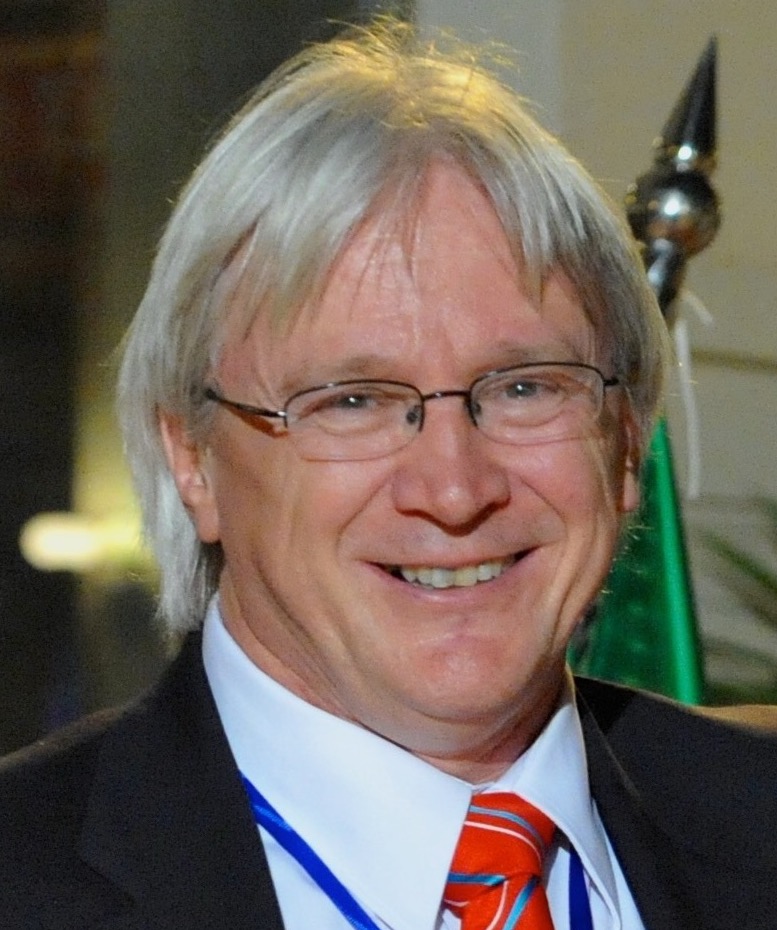
What profession did you enter into, and what would you consider to be your greatest joy about doing the work you do?
I entered the prosthetics and orthotics profession in the early 1980s and ultimately focused my clinical career as a certified orthotist. After graduation in 1983, I spent three plus years in the Prosthetics and Orthotics department at the Chedoke Rehabilitation Centre in Hamilton before joining the Prosthetic and Orthotic Programs at George Brown College as a full-time educator in 1986. In 1988, I also established my own clinical practice, Clinical Orthotic Consultants, which today is Boundless Biomechanical Bracing.
For me, one of the great things about this profession is the combination of clinical care, problem-solving and the ability to make a very tangible difference in someone’s life. We have the opportunity to use our knowledge and technical skills to help people function, participate and do things that may otherwise be difficult or not possible.
I have also had the enormous satisfaction of teaching and mentoring others. Seeing former students develop successful careers, become educators and leaders themselves, and contribute back to the profession has probably given me as much satisfaction as anything I have done clinically.
What led you to become involved with ISPO?
Interestingly, I wasn’t initially looking to become involved with ISPO. I was essentially pulled into it by several mentors.
I first met Sepp Heim (very prominent & historical ISPO figure) around 1996 at a Canadian P&O meeting in Vancouver. Around 1997 or 1998, Sepp came to see me at my George Brown office at Sunnybrook and encouraged me to become involved with ISPO, more specifically education and standards related work. At about the same time, Chapal Khasnabis, who went on to have a major role with the World Health Organization, came to see me and delivered much the same message. My longtime teacher and mentor Karl Ruder was also telling me that it was time for us in Canada to become more engaged internationally.
Apparently, they were persuasive.
In 1998, I travelled to El Salvador for my first ISPO education program evaluation. I joined Sepp, Professor John Hughes from the University of Strathclyde and Miguel Gomez to evaluate an emerging Category II P&O education program there in San Salvador.
That trip changed the direction of my professional life.
I subsequently joined the ISPO Education Committee, became its Chair from 2004 – 2007, served as ISPO President-Elect from 2004 – 2007 and then as ISPO President from 2007 – 2010.
What began as one trip to El Salvador developed into almost three decades of involvement with ISPO and friendships with colleagues around the world.
What impact do you think ISPO has had on persons accessing assistive devices and rehabilitation services?
I think one of ISPO’s most important contributions has been establishing and promoting international standards for the education of prosthetic and orthotic professionals.
When I first became involved, much of ISPO’s recognition activity was focused on the Category II Orthopaedic Technologist level, particularly in countries where P&O education and services were still developing. When I became Chair of the Education Committee, we expanded that process into Category I Prosthetist-Orthotist education, beginning in 2004 with evaluations at the University of Strathclyde and the German BUFA program in Dortmund.
That recognition process has since expanded internationally.
But education and accreditation are not ends in themselves. The real objective is to ensure that a person who needs prosthetic or orthotic care can receive it from someone who has been appropriately educated, evaluated and supported.
The issue of professional recognition for those professionals in the Prosthetic and Orthotic profession has been a significant one throughout my whole career. Increasingly, I believe professional recognition is the next major challenge and one that ISPO has to be engaged with.
It is not enough to educate a practitioner to an international standard if that person’s own health system does not properly recognize the profession, provide an appropriate position or pay them adequately. We continue to be at risk of losing good people from the profession or from the countries and communities in which they were educated to serve.
ISPO has an important role in connecting education, standards and professional recognition so that ultimately people throughout the world have better access to quality P&O services.
Are there any current professional projects that you are engaged in?
I still seem to have a few things on the go!
One of my major current ISPO interests is the potential development of an international professional council and registry for prosthetists, orthotists and other recognized P&O professional levels. This builds on work involving international education standards and the potential for stronger recognition of the profession through organizations such as WHO and the International Labour Organization (ILO).
I also remain involved with the ISPO Global Educators Meeting (GEM), which Bryan Malas and I helped initiate. The first GEM was held in Kobe in 2014, and the most recent meeting was in Bangkok in March 2026. The next is planned for Glasgow in 2028.
I continue to participate in ISPO accreditations of educational programs and professional pathways. At present, I am leading an ISPO audit of the United States pathway to prosthetist-orthotist certification, including its education, residency and certification components.
Another area of particular interest is digital technology and additive manufacturing in P&O. Our profession is changing quickly, and I think ISPO can play an important role in helping ensure that new technologies are adopted thoughtfully and based on their ability to improve quality, access and sustainability of care rather than simply because the technology is new.
Can you offer any advice to recent graduates and students in your chosen profession?
Engage, serve and be willing to give something back.
One of my most important mentors, Sepp Heim, taught me that our profession is fundamentally about service. We are here because people need prosthetic and orthotic solutions that help them function and participate in their lives.
I would encourage young professionals not to limit their involvement to what happens between arriving at work and going home.
Become involved in your profession. Join your professional organizations. Volunteer. Teach. Mentor when you have the opportunity. Be curious. Travel if you can. Meet people whose professional and life experiences are different from your own.
There will sometimes be sacrifice involved. Professional and volunteer activities take time away from other things. But in my experience, they give back far more than you expect.
During one of my last visits with Sepp Heim, he said something to me that has always stuck with me: “Without engagement in life Dan, there isn’t so much to live for anymore.”
That was Sepp, and I think there is a lesson in it for all of us.
What are your hobbies and activities outside of your professional life?
I have always believed that professional life needs to be balanced by family, friendships and activities that have nothing to do with prosthetics and orthotics.
My wife and I enjoy travelling, and fortunately travel has been a big part of both our personal and professional lives. I also enjoy golf, particularly the challenges this sport brings along with the friendships that come with it.
Since we also reside in Kelowna, British Columbia, at various times of the year, enjoying the outdoors and everything the Okanagan Valley has to offer has become a big part of our lives. We enjoy hiking and snowshoeing on the many trails, good food and wine, and simply experiencing the natural beauty of this part of Canada. Spending part of the year in Western Canada also gives us the opportunity to explore more of the West.
I am also a long-time amateur photographer. Photography and travel have always fit naturally together for me, and I hope to devote more time to capturing images from the places we continue to visit. I have a few ideas for photographic essays or galleries that I would like to explore in the years ahead. Time will tell whether I actually find the time to do them!
Any other comments or thoughts you would like to share?
When I graduated, I could never have imagined where this profession would take me. I certainly did not expect to become President of ISPO, travel around the world evaluating P&O education programs, or work with colleagues and organizations across so many different countries.
It really began because several mentors encouraged me to become engaged.
Sepp Heim was particularly important. He became much more than an ISPO colleague. He was a mentor, father figure and close friend. He taught me a great deal about international work, leadership and the importance of professional standards, but also about service and engagement.
ISPO also changed my perspective on the world. Travelling to places such as El Salvador, Pakistan, the Caucasus, Cambodia and Togo exposed me to circumstances very different from those we experience in Canada. It made me appreciate what we have here, while also showing me the extraordinary commitment of colleagues working with far fewer resources.
But perhaps the greatest gift ISPO has given me is the people I have met throughout this journey. Colleagues became friends. Students became colleagues. Some eventually became leaders themselves. Sandra Ramdial, our current ISPO President, was actually in the first class I taught at George Brown College in 1986. Bryan Malas, with whom I worked closely on education and the development of GEM, is now President-Elect. Seeing another generation assume leadership is enormously gratifying.
After almost three decades of ISPO involvement, I keep returning to the same basic question: How do we ensure that a person who needs prosthetic or orthotic care receives that care from someone who has been appropriately educated, evaluated, recognized and supported?
The terminology, technology and educational models continue to change, but that purpose really hasn’t.
For me, the thread through all of it has been: education, standards, recognition and service. Perhaps the word – engagement – ties them all together.

